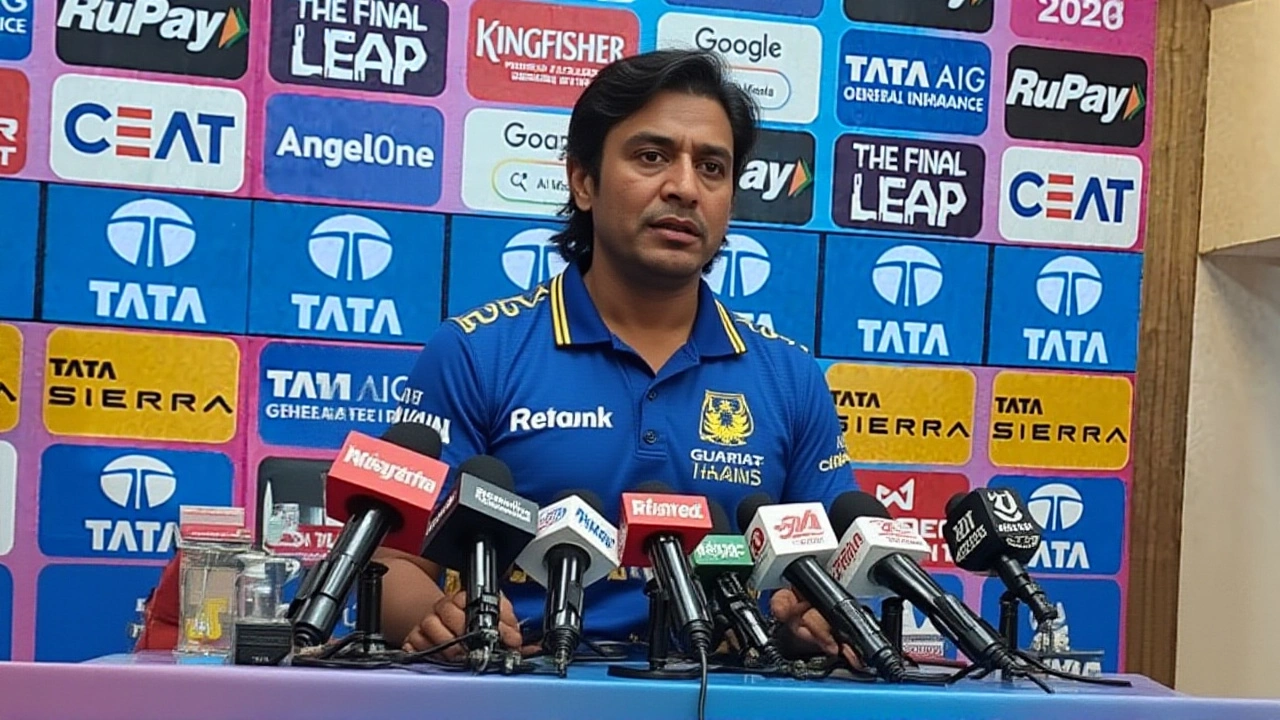
When Vijay Dahiya, Head Coach of Gujarat Titans, spoke to the media ahead of the crucial knockout stage, he flipped the conventional wisdom on its head. While most analysts were fixated on the batting-friendly reputation of high-altitude venues, Dahiya insisted that bowlers would face a steeper climb in Dharamsala.
The statement came just hours before IPL 2026 Qualifier 1Himachal Pradesh Cricket Association Stadium, where Gujarat Titans clashed with Royal Challengers Bengaluru. It was a high-stakes Tuesday evening match that promised to decide who advanced to the final.
Here’s the thing about Dharamsala: it’s often dismissed as a batting paradise. But Dahiya saw something else entirely—a surface that demanded precision from pacers and rhythm from spinners, leaving little room for error.
The Pitch Paradox: Why Bowling Was the Real Challenge
Reports from Navbharat Times described the pitch as offering bounce and seam movement—ideal conditions for fast bowlers. Yet, data from the league stage told a different story. Batsmen had consistently posted massive totals at this venue throughout the 2026 season.
This contradiction created a tactical minefield. On paper, the pitch helped bowlers. In reality, aggressive batting had dominated. Dahiya recognized that while the ball might move off the seam, the short boundaries and thin air meant any lapse in discipline would be punished instantly.
"The test is harder for bowlers," Dahiya noted, emphasizing that consistency under pressure mattered more than raw pace or spin. He pointed out that while batsmen could rely on power-hitting, bowlers had to execute line and length perfectly against world-class hitters.
Ashish Nehra’s Role in Managing Pressure
A key part of GT’s strategy revolved around Ashish Nehra, Bowling Consultant. Reports highlighted Nehra’s ability to handle players who had already experienced international pressure.
Dahiya praised Nehra’s approach, calling his method of managing senior bowlers "commendable." The former India pacer’s experience proved invaluable in calming nerves during net sessions. His focus wasn’t just on technique but on mental resilience—ensuring bowlers didn’t crack when facing early aggression.
This psychological edge was crucial. Many GT bowlers had played overseas leagues and knew how quickly momentum could shift. Nehra’s guidance helped them stay composed, treating each over as an isolated battle rather than part of a larger narrative.
Spinners’ Rhythm and Tactical Nuances
While pace got the headlines, Dahiya also stressed the importance of spinners finding their rhythm in nets. The middle overs would likely become the turning point if pacers failed to take early wickets.
The coaching staff worked extensively on variations—flight, dip, and subtle changes in pace—to keep batsmen guessing. Unlike flat tracks where spinners can simply turn the ball, Dharamsala required them to exploit the slight unevenness in the surface.
Dahiya drew parallels between Dharamsala and Bengaluru, noting similarities in outfield speed and carry. This comparison suggested that GT’s preparation for games in Bangalore translated well to Himachal Pradesh, allowing them to adapt quickly without major strategic overhauls.
Broader Implications for IPL Knockouts
The qualifier format amplifies every decision. One poor spell or dropped catch can eliminate a team after months of hard work. For Gujarat Titans, trusting their bowling unit was non-negotiable.
Royal Challengers Bengaluru, known for their explosive batting lineup, posed a significant threat. If they reached 35+ runs in the first six overs, the game could spiral out of control. Hence, Dahiya’s emphasis on disciplined bowling wasn’t just tactical—it was existential.
Experts suggest that teams focusing on bowling depth tend to perform better in knockouts. Historical data shows that in close matches, wicket-taking spells often outweigh run-chasing efforts due to increased pressure on batters.

What’s Next for Gujarat Titans?
Regardless of the outcome against RCB, the insights gained from Dharamsala will shape GT’s approach moving forward. Whether they advance to the final or drop to Eliminator 2, the lessons learned about handling altitude pitches remain relevant.
Fans should watch how GT adjusts its field placements and bowling rotations in future high-pressure games. The blend of Nehra’s mentorship and Dahiya’s strategic vision positions them as dark horses in any tournament setting.
Frequently Asked Questions
Why did Vijay Dahiya say bowlers faced a tougher test in Dharamsala?
Despite the pitch offering bounce and seam movement, batsmen had scored heavily there during the league stage. Dahiya believed that maintaining consistent line and length against powerful hitters required greater concentration and skill compared to batting, making it a stricter test for bowlers.
What role did Ashish Nehra play in GT’s preparation?
As a bowling consultant, Nehra focused on managing the mental pressure experienced by senior bowlers. His experience in international cricket helped guide players through high-stress situations, ensuring they remained calm and executed plans effectively during critical phases of the match.
How does the Dharamsala pitch compare to other IPL venues?
Dahiya compared Dharamsala to Bengaluru, citing similar outfield speeds and ball carry. However, unlike purely batting-friendly tracks, Dharamsala offered assistance to pacers via bounce and seam, creating a balanced contest where both departments needed to perform optimally.
Who were the main opponents in Qualifier 1?
Gujarat Titans faced Royal Challengers Bengaluru in the first qualifier of IPL 2026. Both teams entered the knockout stage with strong performances, making the encounter highly competitive and strategically significant for determining finalists.
Did spinners play a major role in GT’s strategy?
Yes, Dahiya emphasized the need for spinners to find their rhythm during net sessions. With pacers potentially struggling against aggressive starts, spinners were expected to contain runs and create breakthroughs in the middle overs, leveraging the pitch’s slight irregularities.